The Ultimate Guide to Disinfectants for Facilities.
Defeat the invisible!
Cleaning removes visible dirt. Disinfecting kills the germs left behind — and it only works if you use the right product, at the right strength, for the right amount of time. If you buy the wrong disinfectant, you may not find out until it's too late.
XO2 has manufactured disinfectants and sanitisers in Australia since 1968. No shortcuts or guesswork here. This guide covers what the compliance terms actually mean, how to pick between the options, and how to apply them correctly.
Shop Disinfectants + Sanitisers
.

What exactly is a Surface Disinfectant?
A surface disinfectant is a formulated product designed to destroy pathogenic microorganisms—such as bacteria, viruses, and fungi—that help the transmission of infectious diseases, including influenza, gastrointestinal bugs, and COVID-19.
Professional-grade disinfectants are different to standard general purpose cleaners. They are engineered to achieve specific reduction levels of harmful microbes on hard surfaces. Disinfectants are available in various formulations, including ready-to-use sprays including aerosols, pre-saturated disinfectant wipes, and concentrated liquids.
This type of products is considered essential across diverse range of commercial and institutional environments—ranging from commercial office desks and high-touch facility entryways to healthcare facilities, food preparation areas, and gym equipment.
Is there a difference between cleaners, sanitisers and disinfectants? Yep!
Cleaner
Cleaning aims to physically remove dirt, spills, soils and some germs from surfaces.
Sanitiser
Sanitising aims to remove or reduce the harmful germs on surfaces to a safe level.
Disinfectant
Disinfecting aims to kill 100% or close to 100% of germs and other disease-causing microorganisms on a surface.

What are the most common types of disinfectants and active ingredients used in facilities?
Quaternary Ammonium Compounds (Quats)
These cationic surfactants are the most common active ingredients in professional disinfectant sprays and floor cleaners. They are cost effective, safe for most hard surfaces and can be supplied fragrance-free if required.
Chlorine Compounds: Sodium Hypochlorite (Bleach)
Fast-acting, broad-spectrum options for high-level disinfection. Widely used for heavy-duty sanitation, disinfection of bodily fluids, and food processing areas.
Alcohols: Ethanol and Isopropanol
Fast-evaporating, residue-free and affordable option for sensitive hard surfaces.
Peroxides & Oxidizing Agents: Hydrogen Peroxide and Peracetic Acid
Eco-friendly, sustainable options breaking down into water and oxygen. Commonly used in food and healthcare facilities.
Phenolics, Aldehydes & Iodophors
These have been largely replaced by safer alternatives, however, they are still used in specific, niche applications.
What are the key factors when choosing a disinfectant?
Disinfection should be done right. Cutting corners can really cost you. Consider these 5 factors.

Efficacy
Is your disinfectant effective against the specific microorganisms you're trying to eliminate?
(e.g. TGA listings, independant testing reports, influenza, COVID-19, Staph, E. Coli)

Surface Compatibility
Is the disinfectant safe to use on your surfaces or could it cause damage?
Be especially mindful on natural stone, timber, soft plastics, rubber, metals, painted surfaces and electronics.

Safety
Using disinfectants generally requires the use of some PPE (Personal Protective Equipment).
Choose a disinfectant that's safe to use and won't cause harm. (e.g. non-dangerous goods and fragrance-free options)

Application Method
What is the best and easiest way to use a disinfectant in your facility?
There's many application methods available. (e.g. ready-to-use sprays, wipes, foggers, floor concentrates)

Cost
Calculating your cost per ready-to-use litre.
Consider things like dilution and concentration when making a decision but don't cut corners.
What are the most popular ways to apply and dispense disinfectants?
Find the perfect ways to use and dispense disinfectants in your facility.
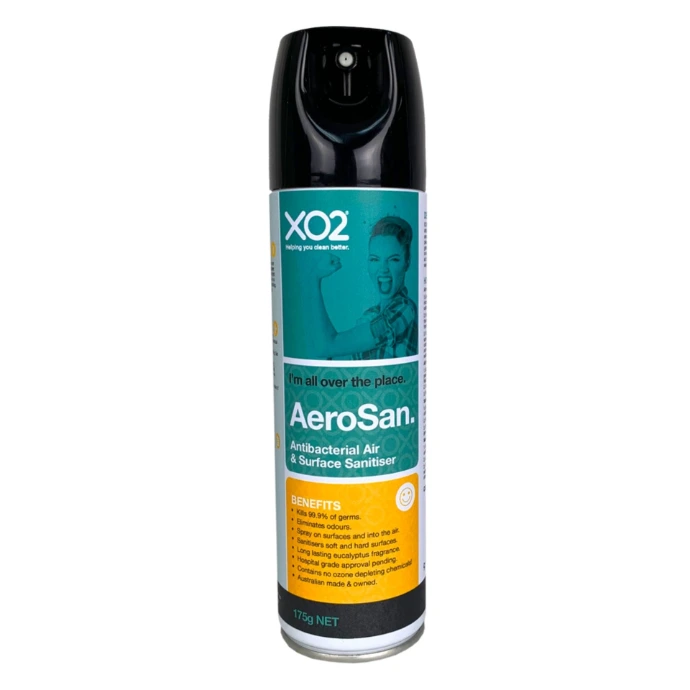
Disinfectant Aerosol Sprays
Ready-to-use spray for quick disinfection, cleaning and sometimes air freshening. Ideal for on high-touch surfaces and air spaces with no manual mixing or filling of bottles required.
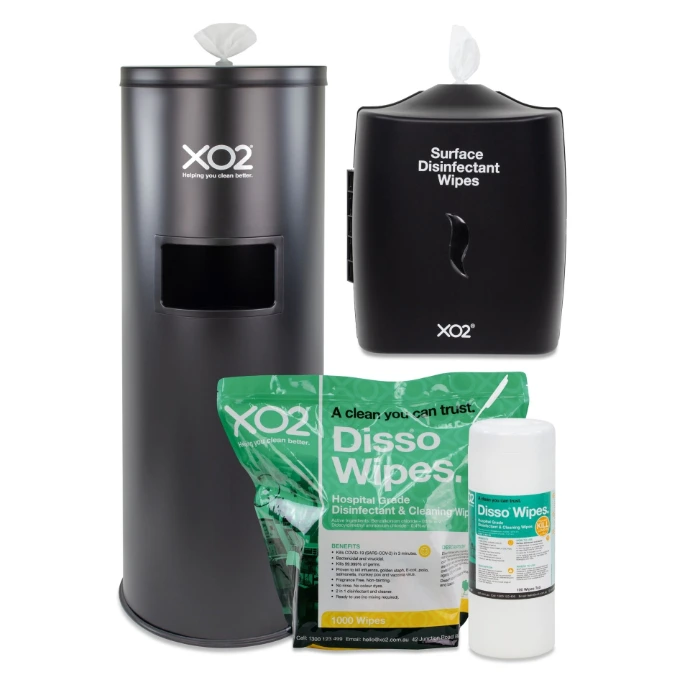
Disinfectant Wipes + Dispensers
Pre-moistened hospital-grade wipes for single-step, convenient disinfection and cleaning in all traffic environments. Wall mounted and free-standing dispensers also available.
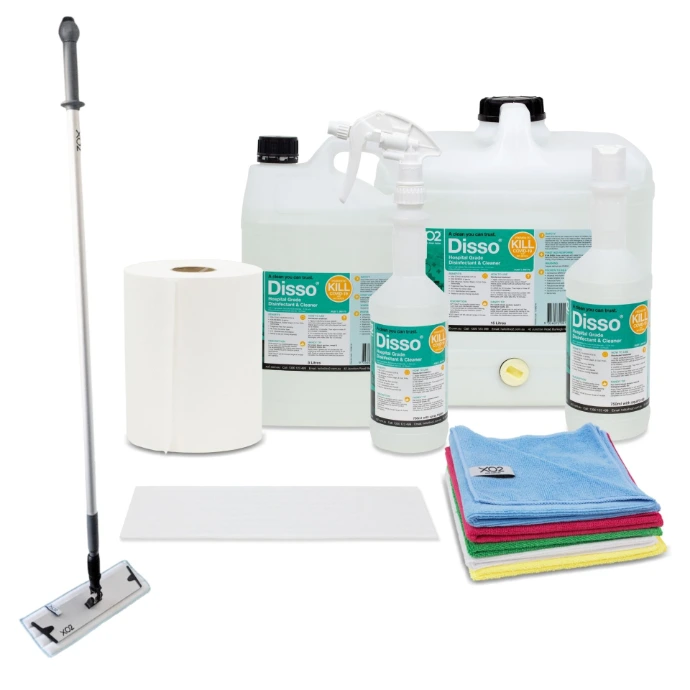
Bulk Liquids with Spray Bottles and Microfibre
Cost-effective bulk liquids paired with trigger sprays, microfibre cloths and microfibre floor mops for versatile surface hygiene. Hospital grade disinfection + disposable microfibre floor mops is the ultimate choice.
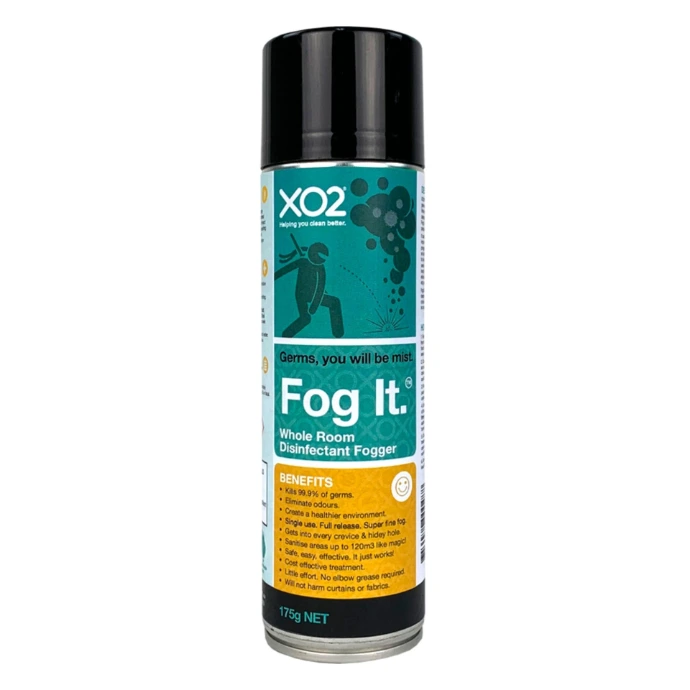
Full Release Aerosol Foggers + Hand Held Foggers
Disperses a fine mist to decontaminate entire rooms and reach hard-to-access spaces. The fog travels into crevices, cracks and hidey holes. Best of all, it’s cost-effective and low effort is needed.
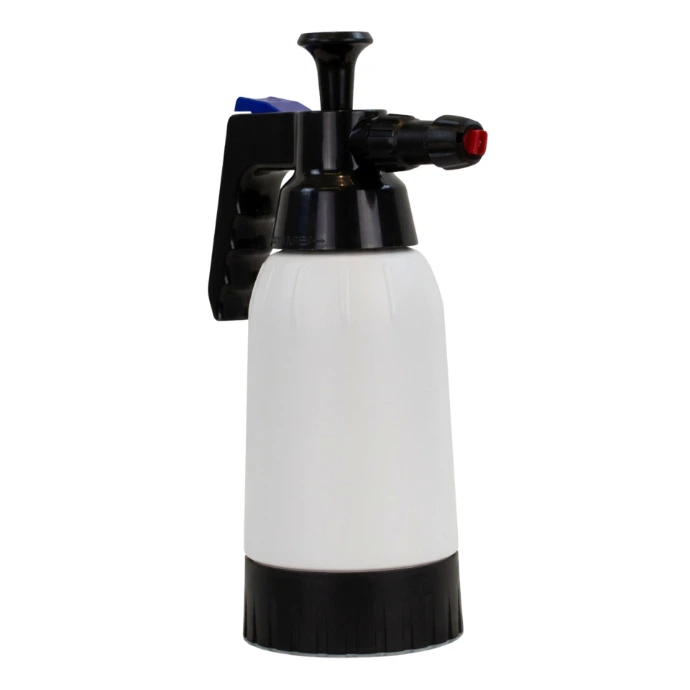
Pump Up Foamer Sprayers
Creates thick, clinging foam to increase chemical dwell time on vertical and overhead surfaces. And a continuous spray button for prolonged, comfortable spraying.
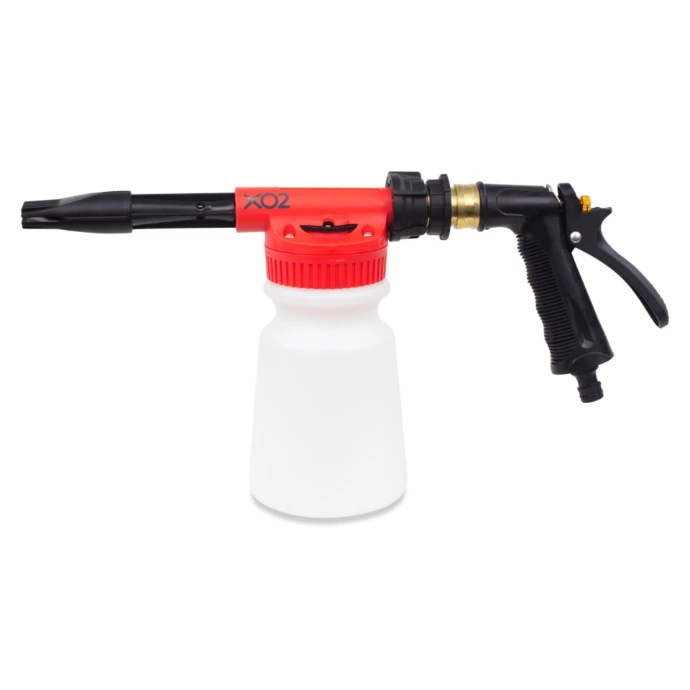
Foaming Guns
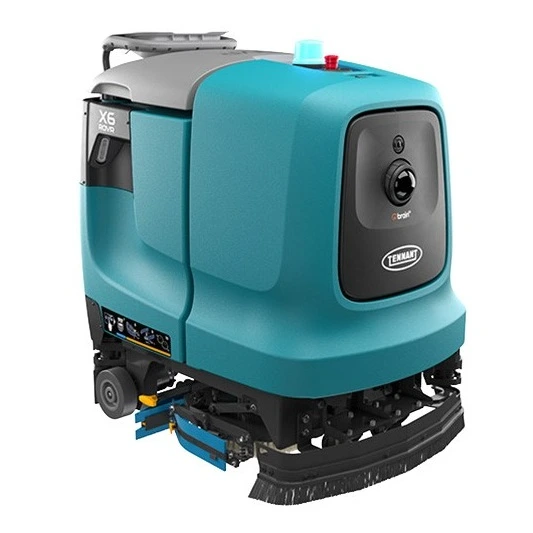
Automatic & Robotic Floor Scrubbers
This type of cleaning machine dispenses disinfectant cleaning solutions on to the floor then scrubs, and suction dries surfaces all in one pass to efficiently cover large spaces.
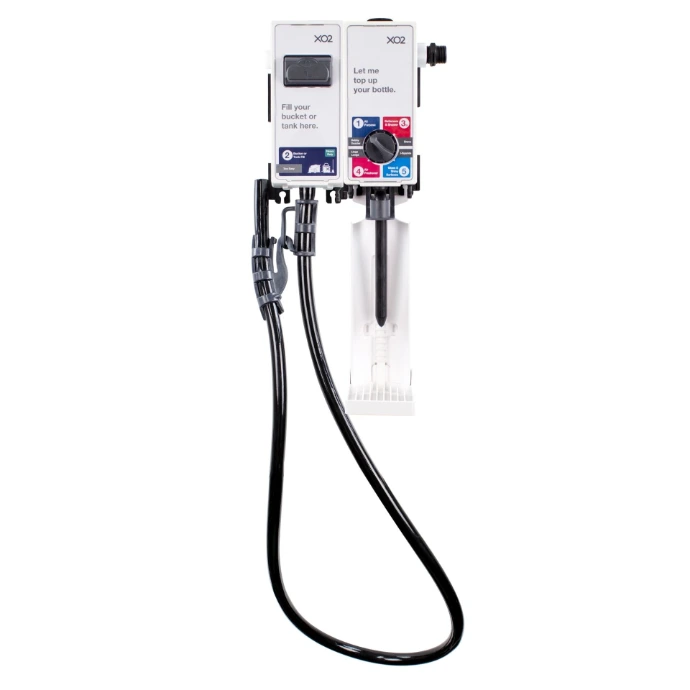
Automatic Dilution Mixing Stations
When connected to a water source these devices automatically dilute concentrates to guarantee precise chemical ratios every time. The best way to fill your bottle, bucket or tank... safely, easily and accurately.
Find the right products for your facility.

Disinfection of:
High level disinfection and healthcare
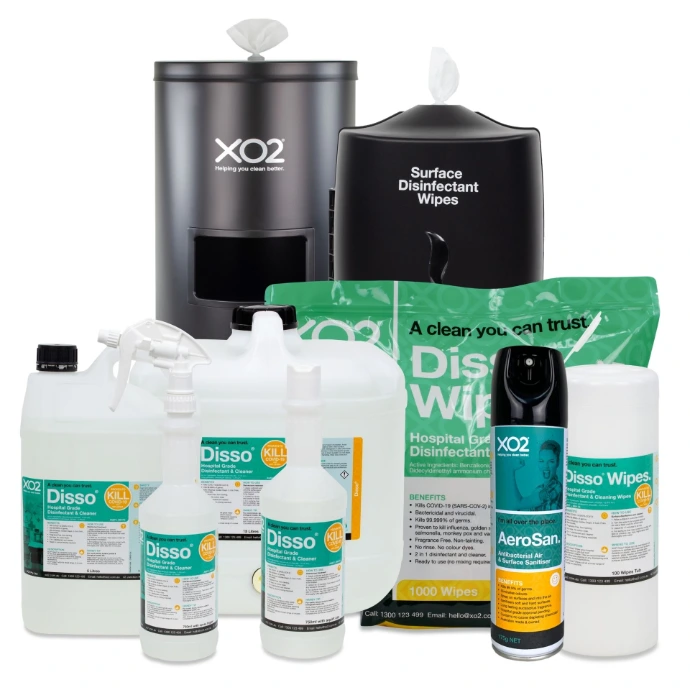
Best product: Disso or Disso Wipes (TGA Listed, Hospital-Grade)
Best for: Surfaces and touchpoints in hospitals, aged care centres, child care, schools.
XO2 Category: Disinfectants & Sanitisers
Disinfection of:
Commercial: Touchpoints
Best product: Aerosan or Disso or Disso Wipes
Best for: Washrooms, corridors, foyers
XO2 Category: Disinfectants & Sanitisers
Disinfection of:
Commercial: General
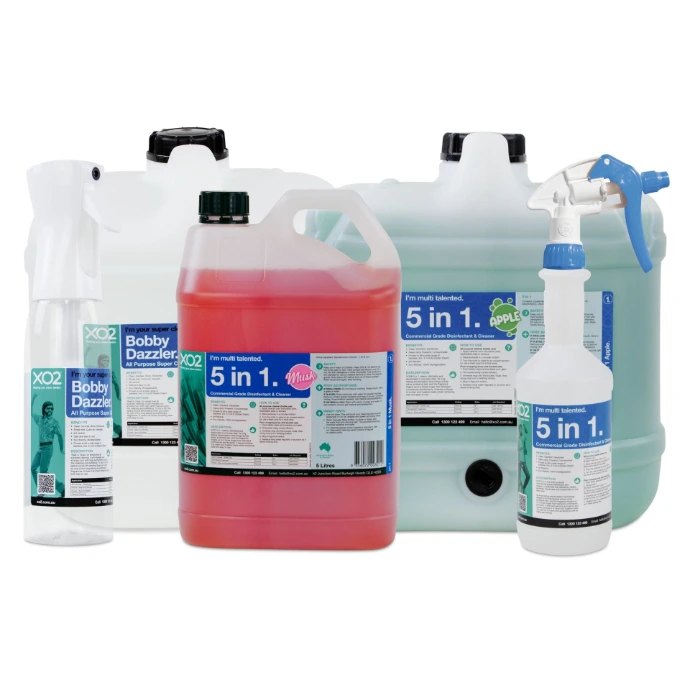
Best product: 5 in 1 or Bobby Dazzler
Best for: Washrooms, tables, floors, foyers and most hard surfaces.
XO2 Category: Disinfectants & Sanitisers
Disinfection of:
Commercial: Floors
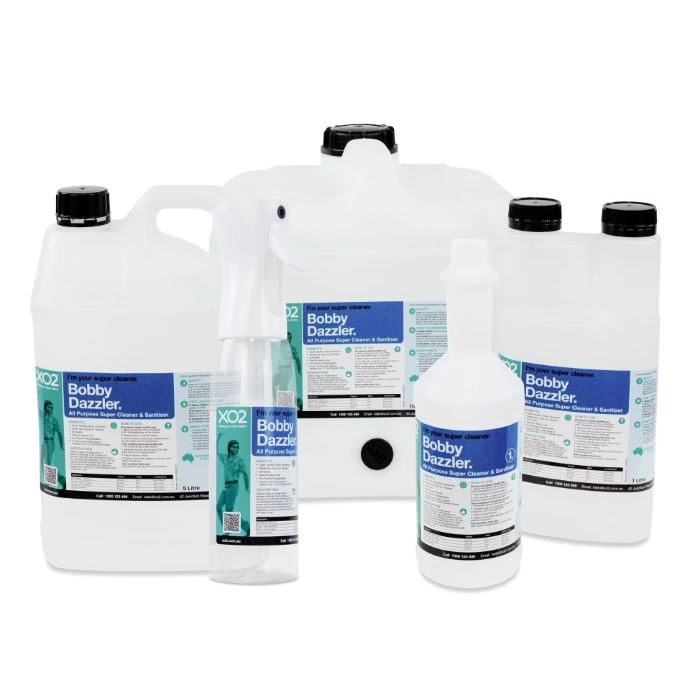
Best product: Bobby Dazzler
Best for: Shiny floors, foyers, tiles, vinyl and natural stone for a streak-free finish.
XO2 Category: Disinfectants & Sanitisers
Disinfection of:
Food Areas: General
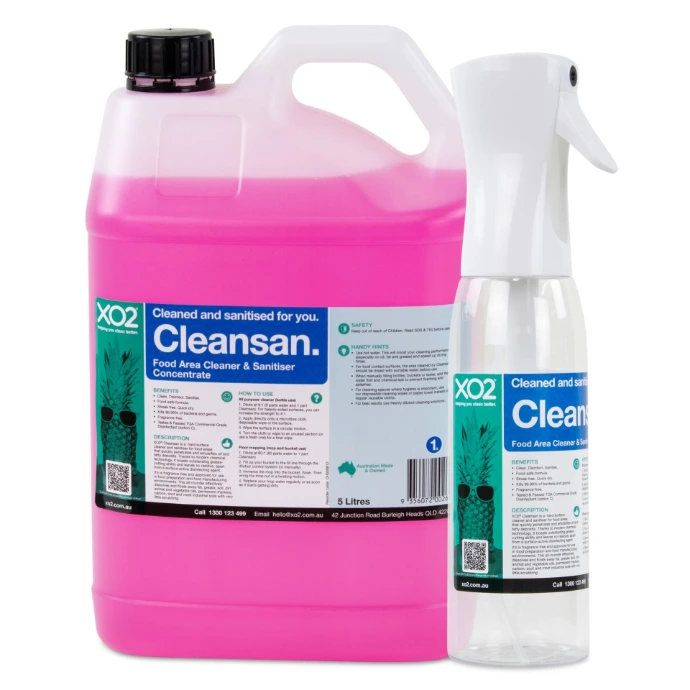
Best product: Cleansan (Food Area Approved)
Best for: Surface wiping and floors in restaurants, commercial kitchens and food manufacturing areas
XO2 Category: Food Area Cleaners & Sanitisers
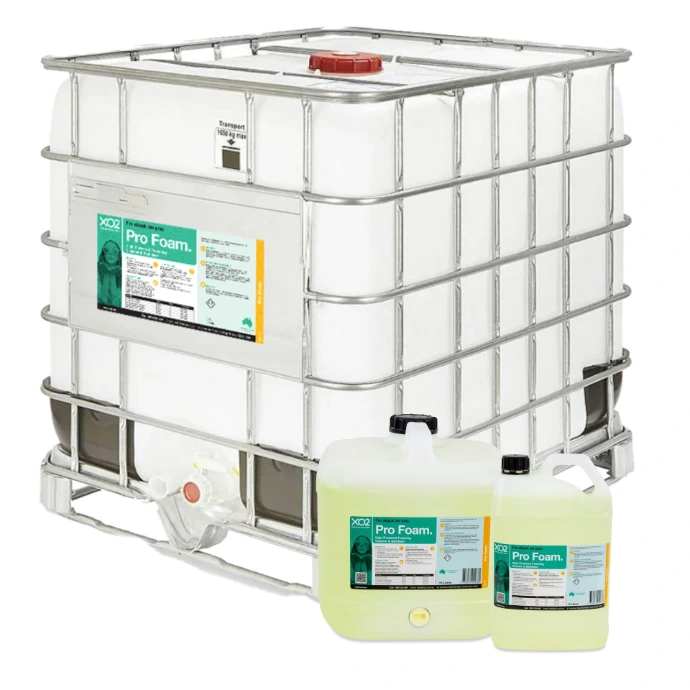
Disinfection of:
Food Areas: Floors, Walls + Equipment
Best product: Pro Foam (Food Area Approved)
Best for: Floors, walls and equipment in restaurants, commercial kitchens, food manufacturing areas, butcheries, abattoirs and fisheries
XO2 Category: Food Area Cleaners & Sanitisers
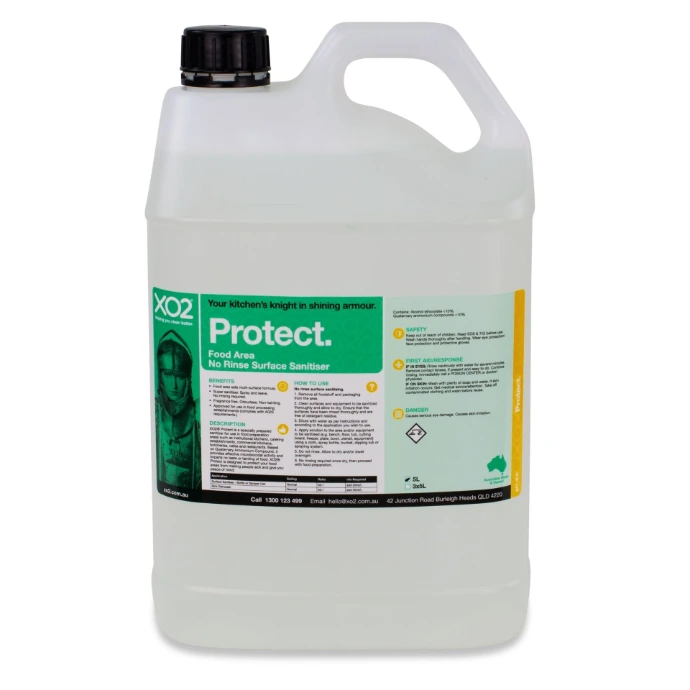
Disinfection of:
Food Areas: No Rinse
Best product: Protect (Food Area Approved)
Best for: Commercial kitchens, food manufacturers, butcheries, abattoirs and fisheries for sanitising equipment, counters, floors and hard surfaces.
XO2 Category: Food Area Cleaners & Sanitisers
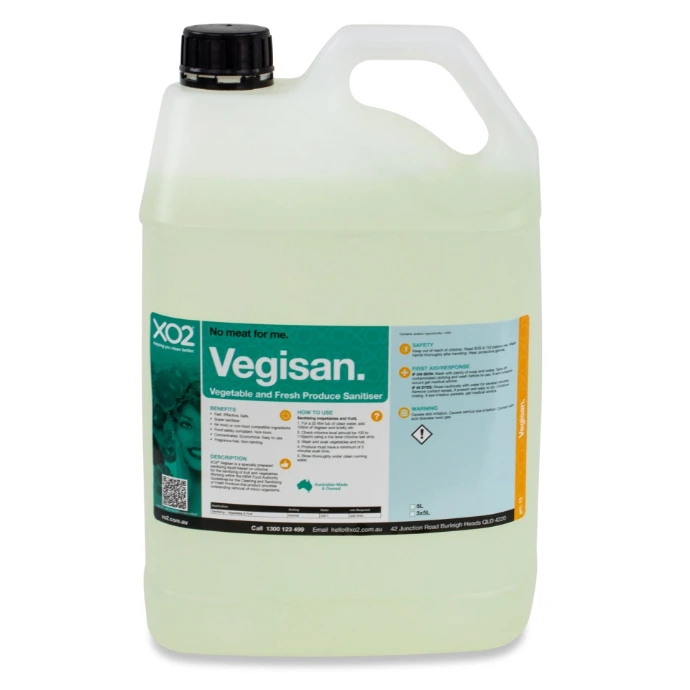
Disinfection of:
Food Areas: Produce
Best product: Vegisan (Food Area Approved)
Best for: Sanitising vegetables and fruit in commercial kitchens, food manufacturers, restaurants, canteens, cafes and fruit & vegetable stores.
XO2 Category: Food Area Cleaners & Sanitisers
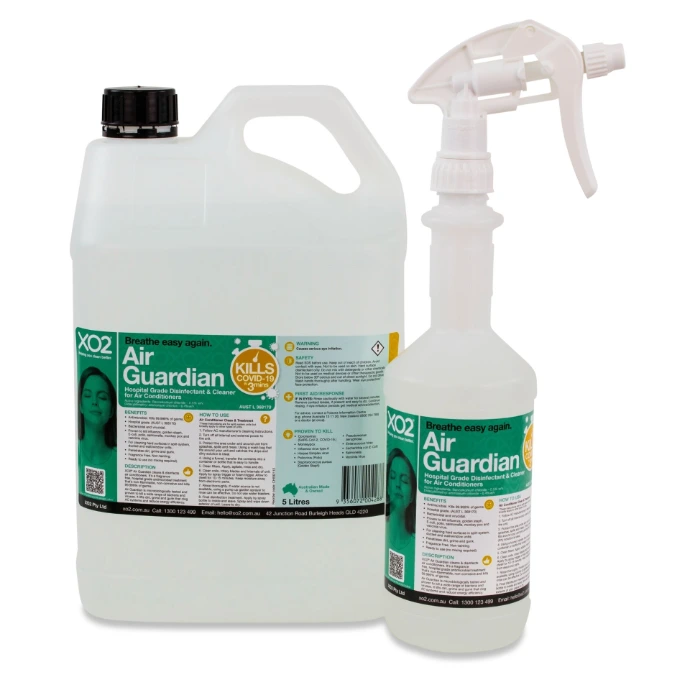
Disinfection of:
Air Conditioners
Best product: Air Guardian (TGA Listed, Hospital-Grade)
Best for: Disinfection treatment and cleaning of air conditioner systems
XO2 Category: Disinfectants & Sanitisers
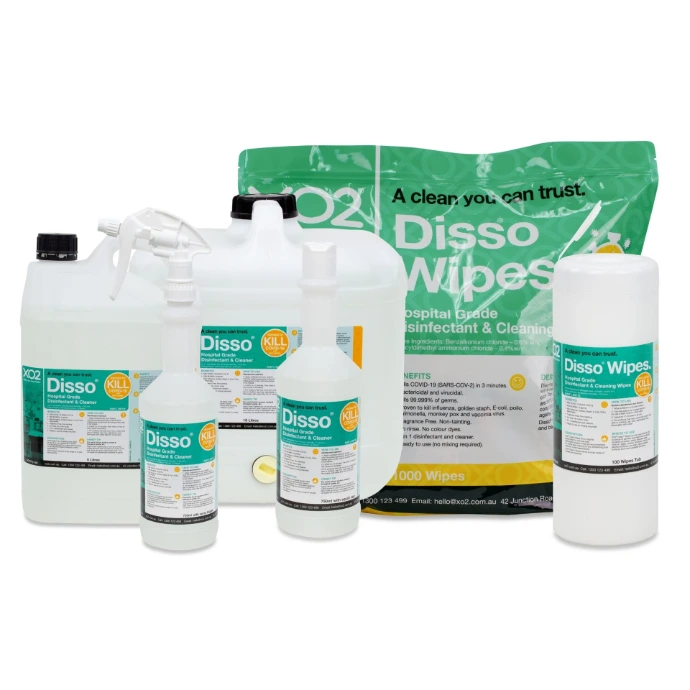
Disinfection of:
Blood, Urine, Vomit & Faeces Spills
Best product: Disso or Disso Wipes (TGA Listed, Hospital-Grade)
Best for: Disinfection and decontamination of surfaces with blood, urine, vomit and faeces.
XO2 Category: Disinfectants & Sanitisers
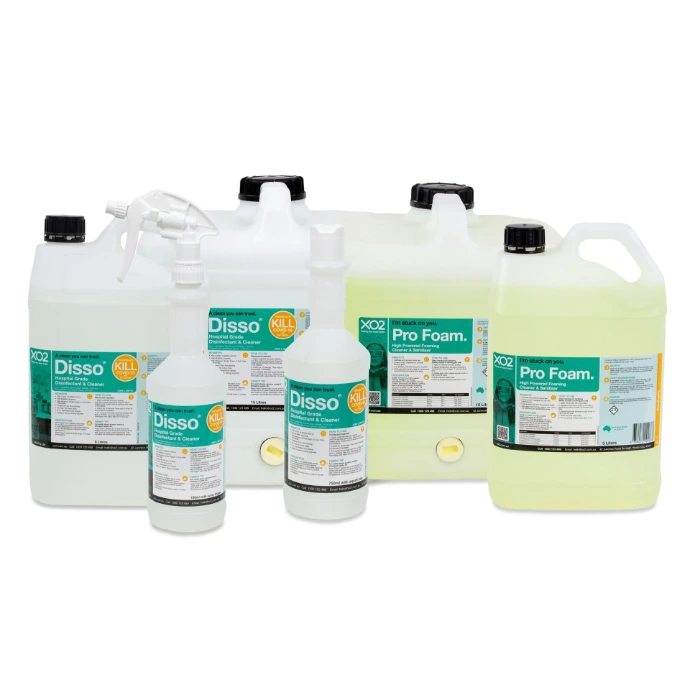
Disinfection of:
Flood Damaged Areas
Best product: Disso or Pro Foam
Best for: Cleaning and treatment of flood damaged indoor areas.
XO2 Category: Disinfectants & Sanitisers
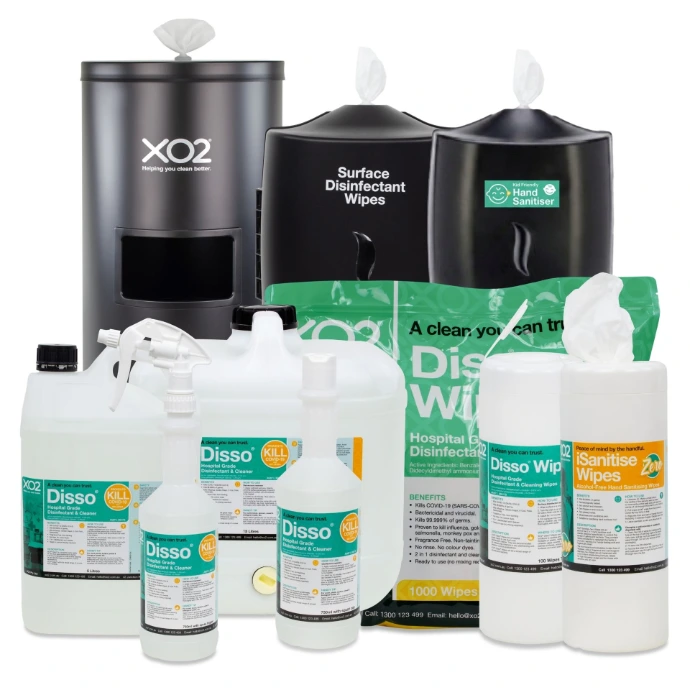
Disinfection of:
Gym & Fitness Equipment
Best product: Disso or Disso Wipes or iSanitise Wipes
Best for: Gym equipment, mats and other fitness apparatus.
XO2 Category: Disinfectants & Sanitisers

Disinfection of:
Sandpits
Best product: Sandy Cracks
Best for: Sandpits in childcare centres, playgrounds, holiday parks, schools or homes.
XO2 Category: Disinfectants & Sanitisers
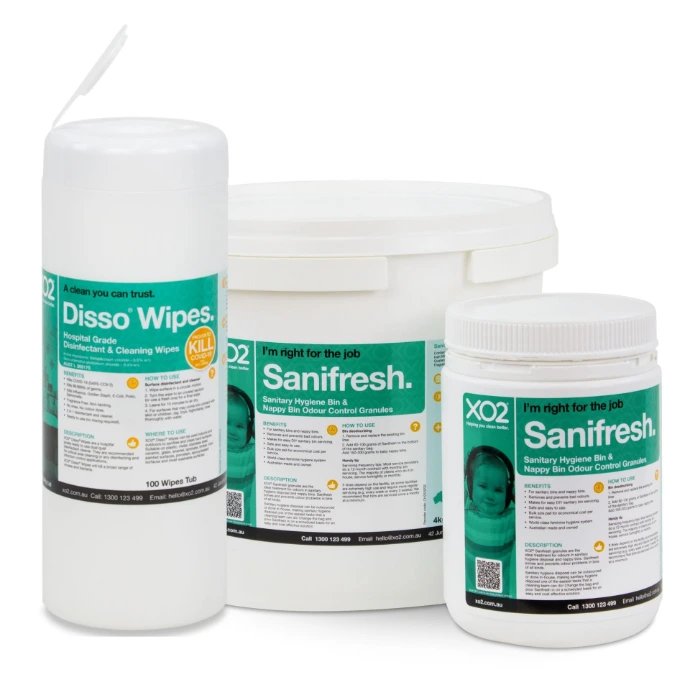
Disinfection of:
Sanitary Hygiene & Nappy Bins
Best product: Sanifresh (granule for inside bins) or Disso Wipes (cleaning all surfaces)
Best for: Feminine hygiene bins and nappy bins
XO2 Category: Sanitary Hygiene Disposal Bins, Bags & Accessories
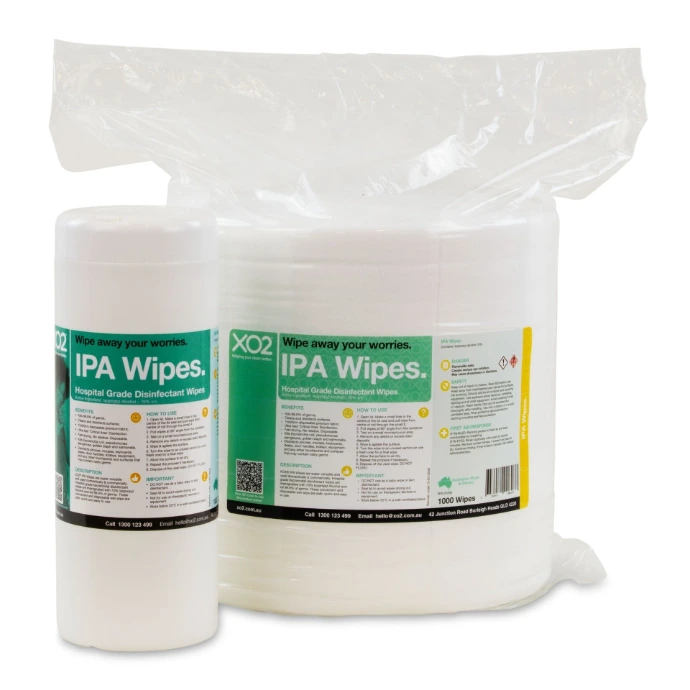
Disinfection of:
Sensitive Electronic Equipment
Best product: IPA Wipes - Isopropyl Alcohol (Hospital Grade)
Best for: Screens, phones, keyboards, pin pads, door handles
XO2 Category: Disinfectants & Sanitisers
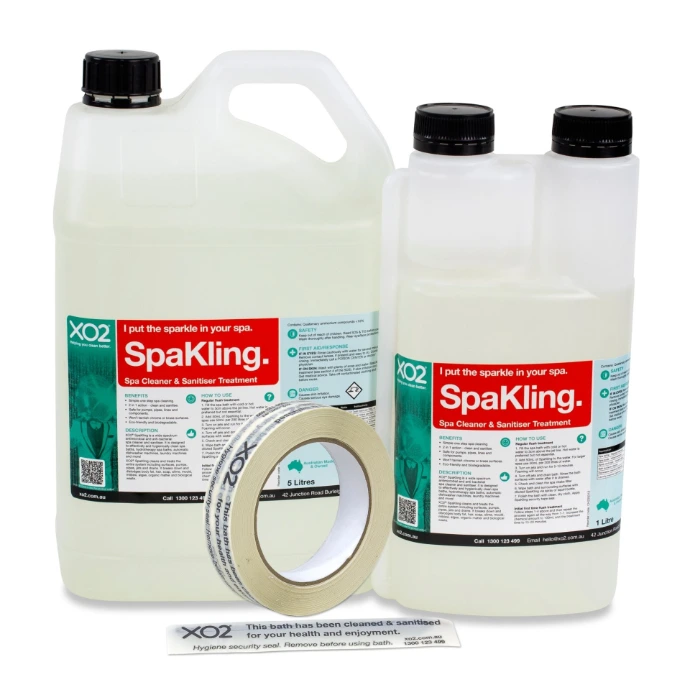
Disinfection of:
Spa Baths & Pipes
Best product: SpaKling
Best for: Treatment of spa surfaces, pumps, pipes, jets and drains in commercial and domestic spa baths and hydrotherapy spa baths.
XO2 Category: Shower, Bathtub & Spa Cleaners
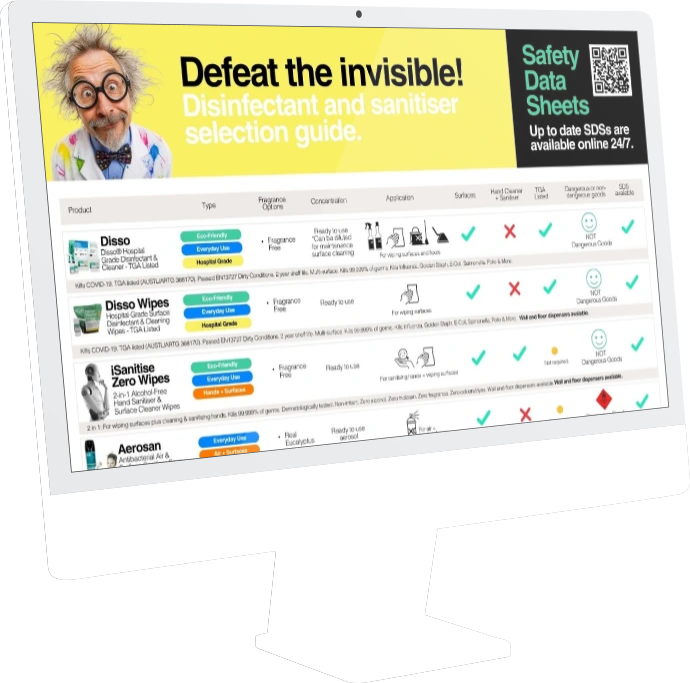
The XO2 Disinfectant & Sanitiser Selection Guide
Need help choosing the right professional disinfectant or sanitiser for your business or facility? Find the right product everytime with this easy to follow 1-page comparison guide.
Getting the application right.
Here's the 4 steps to using disinfectants effectively.
1
Pre-cleaning
Clean what you can see. For best results remove any organic matter and surface soil before disinfecting.
2
Apply the Disinfectant
Always wear gloves and any other required PPE. Use the disinfecatnt at the proper dilution and apply following the directions provided.
3
Contact Time
Allow the surface to remain wet with the disinfectant for the specified kill time. Then wipe or rinse off any excess if necessary. For surfaces that may come in contact with skin or children (eg. highchairs, toys) rinse thoroughly/.
4
Stay in Control
Keep a consistent cleaning schedule to stay on top of your cleaning and hygiene.
Disinfection by facility.

Schools + Childcare
Surface disinfection of desks, toys and high-touch points. Use hospital grade products during flu and gastro outbreaks.

Healthcare + Aged Care
Hospital-grade disinfection required with TGA Listed products and documented contact times. Non-negotiable.
Hotels, Resorts + Accommodation
Surface disinfection in guest rooms, common touchpoints and food & beverage areas.

Commercial Offices
Surface disinfection of desks, kitchens, touchpints and shared equipment.
Gyms + Fitness Centres
Surface disinfection of change rooms, mats, shared equipment and touchpoints like door handles and switches.
Professional Cleaners
Professionals require a combination of disinfectant options to cover a wide range of client requirements.
Hospital-Grade Disinfectants vs Probiotic Cleaners... which is better?
Every facility should use both. Here's why...
There are areas that will always only use disinfectants because they are high-risk crital environments (eg. operating theatres). This following section does not apply to these crital areas. But what about for everywhere else?
Here's one way to think about it... when you're sick, a doctor may prescribe antibiotics. At the end of your course of antibiotics many people choose to assist their recovery and gut health by taking probiotics. If you were aiming for optimium health, you wouldn't take antibiotics as a supplement forever indefinitely but you may consider taking probiotics long term. In the same way, over using disinfectants within a facility can have consequences and using probiotics over the long term has little downside risk.
One of those consequences can be AMR or antimicrobial resistance. This happens when germs—such as bacteria, viruses, fungi, and parasites—change and develop the ability to defeat the medicines and disinfectants that were designed to kill them. It's where we get the term "superbugs" and "sick building syndrome" from. As a result, products that used to be effective stop working, making common infections harder or even impossible to treat, which can lead to longer illnesses and increased health risks.
So in a nutshell, every facility cleaning program would be wise to incorporate both hospital-grade disinfectants and probiotic cleaners. Here's 2 of Australia's most popular options and some pros and cons.
Example: Hospital-Grade Disinfectant
- Effective on blood, bodily fluids and infections.
- Regular use and overuse may contribute to AMR (Antimicrobial Resistance)
- Kills both good and bad microbes.
- All-in-one... for wiping and mopping
- Safe on all washable surfaces.
- Fragrance-free, odourless and non-tainting.
- Reliable for high-risk and crital areas.
- Reduces odours.
Example: Probiotic Cleaner
Recommended for everyday and regular use in non-medical and non-critical areas.
Learn More- Promotes a healthy microbiome. The good bacteria outcompetes the bad.
- Surfaces keep getting cleaner over time.
- Will not cause or contribute to AMR (Antimicrobial Resistance)
- No gloves or PPE required. Eco-friendly.
- All-in-one... for wiping and mopping
- Safe on all washable surfaces.
- Fragrance-free, odourless and non-tainting.
- Effective at eliminating odours.
- Allergy friendly. Family friendly. Pet friendly.
- Not suitable for blood, bodily fluids and infections.
- Not suitable for operating theatres and critical areas.
Disinfectant + sanitiser categories.
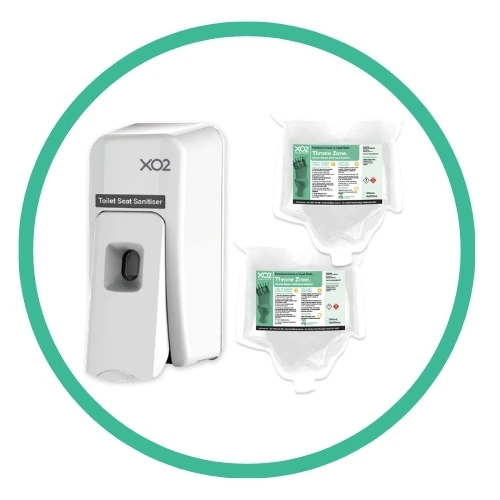
Explore Australia's leading range of disinfectant and sanitiser products manufactured by XO2®.
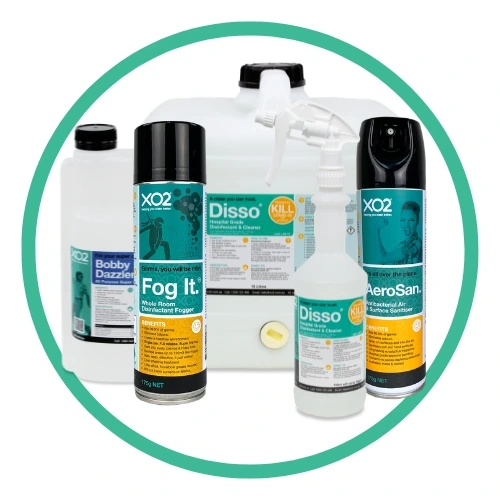
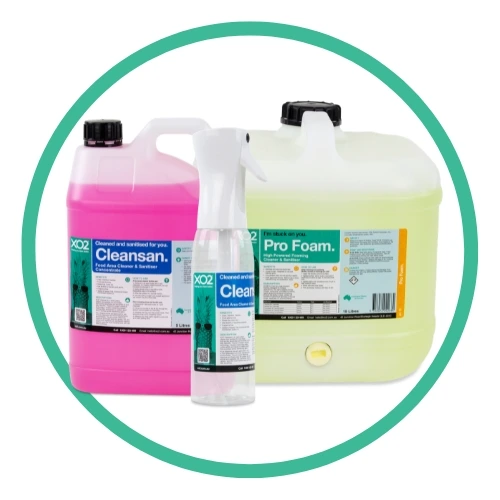
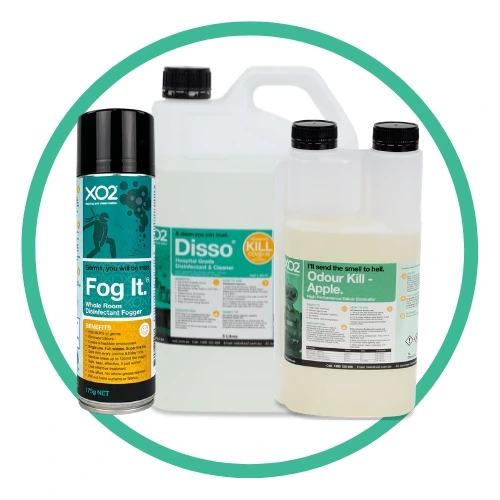
Disinfectants & Sanitisers
(Including Hospital-Grade)
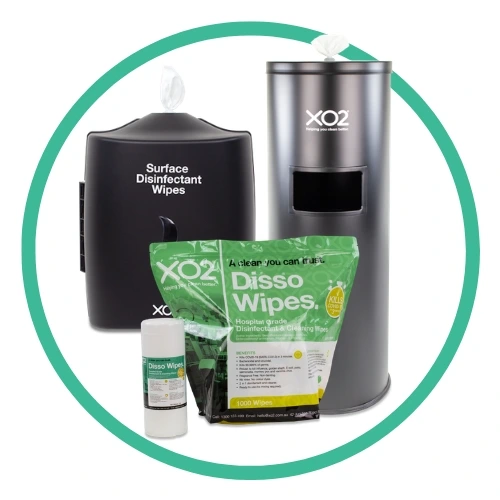
Hand Hygiene
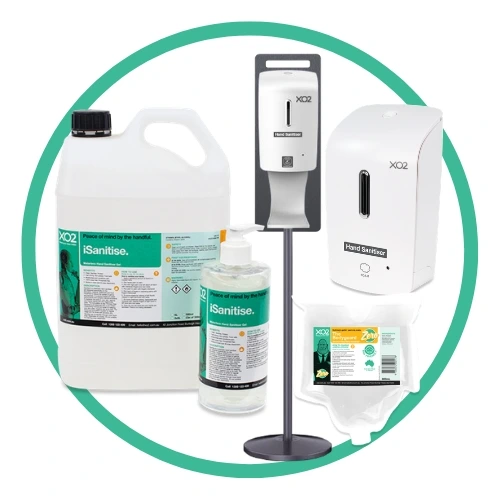
(Including Hand Sanitisers)
Common questions
Here are some common questions about disinfectants and sanitisers.
- Bottle with spray trigger or squirt cap - Find XO2's range of labelled bottles, triggers and lids here.
- Aerosol spray can (eg. AeroSan - Antibacterial Air & Surface Sanitiser Spray)
- Full release aerosol fogging can (eg. Fog It® - Whole Room Disinfectant Fogger)
- Cleaning cloths - Find XO2's range of cloths here.
- Bucket - Find XO2's range of buckets here.
- Mop and wringer bucket - Find XO2's range of mops here.
- Scoop - for granules
- Pump up sprayer (eg. Klager Foamya Pro 1.25L Handheld Pump Up Foam Sprayer)
- Foaming Gun (eg. XO2® Carrot Top - Chemical Foaming Gun with Adjustable Dilution)
- Fogger
- Carpet extraction machine
- Automatic floor scrubber
- Automatic dosing systems - Find XO2's chemical dosing and dilution dispensers here.
- ARTG Listing and AUST L Number: To be legally supplied for healthcare use, the product must be included on the Australian Register of Therapeutic Goods (ARTG). Most carry an AUST L number, meaning they have been assessed for safety, quality, and compliance with their labeled claims.
- Pathogen Destruction: Unlike regular household cleaners, TGA listed disinfectants undergo stringent testing to ensure they effectively eliminate microorganisms—including bacteria, viruses, and fungi—that can cause infections.
- Compliance and Efficacy: Products making specific claims must comply with TGA standards. They are only considered compliant and effective when used strictly according to the manufacturer's approved concentration, application directions, and contact/dwell times.
No. Never mix different chemical products or disinfectants together. Combining chemicals can neutralise their active ingredients, significantly reduce product effectiveness, and possibly trigger dangerous chemical reactions that release toxic fumes or gases.
- Incorrect Dilution: Failing to follow exact manufacturer ratios when mixing concentrates can render the product ineffective or damage surfaces. Check out our XO2 Chemical Dilution Calculator for help.
- Ignoring Contact (Dwell) Time: Wiping or drying surfaces prematurely prevents the active ingredients from destroying targeted pathogens.
- Using Expired Products: Degraded chemical compounds lose potency over time. Always verify manufacture and expiry dates.
- Using Inferior Products: Low-quality or unverified alternatives may lack third-party laboratory validation or regulatory listings. (Quality XO2 disinfectants feature rigorous testing and TGA-listed hospital-grade options).
- Applying Disinfectant to Dirty Surfaces: Organic soil and grime block chemical contact, reducing efficacy. Always pre-clean surfaces before disinfecting.
- Neglecting Safety Protocols: Failing to wear appropriate PPE and not ensuring adequate ventilation can expose staff to skin, eye, or respiratory irritation.
Yes. Over time, active chemical compounds degrade, reducing the product's ability to effectively destroy pathogens. Always check the product label for the expiry date and replace your stock accordingly. XO2 disinfectants typically feature a 2-year shelf life from the date of manufacture when stored under recommended conditions.
Wipes are the most intelligent solution if you’re after convenience, safety, and hygiene. Sprays and liquids are your best bet for disinfection at a more budget-friendly price and for harder-to-wipe surfaces.
No. Some chemical formulations can corrode, discolour, etch, or damage specific materials. Some surfaces that can easily damage include natural stone, soft plastics, rubber, metals and untreated timber. It's important to always verify surface compatibility via the product label and technical data before application. If you are still not certain, test the product first in an inconspicuous area before proceeding.
Remember that effective disinfection is critical to facility health, hygiene, and safety. It's an area where cutting corners can introduce significant risk. Make sure you source professional-grade products from reputable manufacturers with verified claims. Be very cautious of low-cost, unverified alternatives that may rely on fragrances and colours without providing documented antimicrobial efficacy. You may also come across high cost products with false claims too.
In a nutshell, a disinfectant is a type of antimicrobial but all antimicrobials are not disinfectants. Antimicrobial is a very broad umbrella term that includes lots of substances.
An antimicrobial can be used on surfaces, on living tissue (eg. antiseptics), or inside the body (eg. antibiotics). They may kill microbes (cidal) or simply inhibit their growth and reproduction (static). Whereas disinfectants are primarily used on non-living objects and surfaces. These are designed to destroy or deactivate pathogenic microorganisms on contact within a specific timeframe.
- 'iSanitise Zero' Wipes - Alcohol-Free Hand Sanitiser & Surface Cleaner Wipes
- 'iSanitise Zero' Wall-Mounted Dispenser Station Starter Kit
- 'iSanitise Zero' Alcohol-Free Foaming Hand Sanitiser
1. High-Touch Points: Surfaces and objects handled or touched frequently by multiple people—such as door handles, light switches, handrails, elevator buttons, shared desks and keyboards—should be disinfected at least daily. Pre-saturated disinfectant wipes are very effective for these areas, offering convenience and simplifying the decontamination on most surface types.
2. Seasonal Risks: Increase disinfection frequency during the winter months or peak flu seasons. This is when pathogens survive longer on surfaces and transmission rates in the community rise.
3. Infection Outbreaks and Incidents: Thorough disinfection of affected areas should be conducted where illnesses are recorded. Especially when cold, flus and gastro cases have been reported. If vomit or other bodily fluids are present, highly levels .
4. Regulatory and Health Directives: Your relevant public health authorities may mandate increased cleaning frequencies during outbreaks or elevated community health risk periods.
- Pre-Cleaning is Required: Bleach fails to disinfect effectively if organic soil is present.
- Short Shelf Life & Degradation: Active chlorine potency reduces daily and is easily degraded by heat, sunlight, water hardness, exposure to air and container contaminants.
- Daily Mixing: Fresh solutions must be mixed daily to maintain efficacy, making it less stable and more labour-intensive than modern commercial disinfectants.
- The Smell: Bleach, even when fragranced can give off a very unpleasant and overpowering smell that many people find uncomfortable to be around.
- The application method: Correct spray-and-wipe usage usually prevents disinfectants from entering the tank at all.
- Dilution and concentration: The amount of chemical relative to water.
- Frequency: How often the solution enters the system.
- Tank context: What other substances are entering the tank and when.
By evaluating these factors for your specific cleaning tasks, you can determine whether your application poses a risk to your septic system.
We're here to help.
Give us a call on 1300 123 499 or send us a message if you're not sure which product fits your space — no lock-in contracts, no hard sell, just the right answer.
Related Resources
Selection Guides
Articles
- Disinfectant Wipes vs Sprays: Which Is More Effective?
- 12 Disinfectant Myths, Debunked By Experts
- How to Use a Disinfectant Fogger to Clean Your Facility, Workplace or Home
- 17 Disinfectant Safety Tips Everyone Should Know
- How to Choose the Best Disinfectant for Cleaning Surfaces: A Comprehensive Guide
- How To Disinfect Hard Surfaces
- 5 in 1 Cleaner Disinfectant: Your Top Questions Answered
- Are Disinfectants Septic Safe?
- The Power of Disinfectant Wipes: Benefits You Need to Know
- Is It Safe to Use Cleaning Chemicals & Disinfectants During Pregnancy?
- What is the difference between cleaning, sanitising and disinfecting surfaces?
- 21 Cleaning Chemical Handling Guidelines For Your Workplace
- How To Clean & Disinfect Air Conditioners Like A Pro
- How To Clean And Sanitise Your Spa Bath
Videos
- Video: Fog It® - Disinfect Your Spaces With The Click Of A Button. Australia's First Germ Fogger.
- Video: Thieve Steals XO2's 5 in1 Musk Disinfectant Cleaner!
Calculators
Products
Hospital Grade
- Disso® - Hospital Grade Disinfectant & Cleaner
- Disso® Wipes - Hospital Grade Disinfectant & Cleaner
- IPA Wipes - Hospital Grade Disinfectant Wet Wipes - Isopropyl Alcohol
Commercial Grade
- 5 in 1 - Commercial Grade Disinfectant & Cleaner (7 fragrances to choose from)
- Bobby Dazzler - For Mopping Floors & Wiping Surfaces
- Lemongrass Disinfectant Cleaner - Fruity, Citrus, Green & Aromatic (The Good Box)
- 'iSanitise Zero' Wipes - Alcohol-Free Hand Sanitiser & Surface Sanitiser Cleaning Wipes
- AeroSan - Antibacterial Air & Surface Sanitiser Spray
- Fog It® - Whole Room Disinfectant Fogger (Full Release)
- Sanifresh - Sanitary Hygiene Bin & Nappy Bin Odour Control Granules
- Power Bleach - All Purpose Liquid Bleach & Disinfectant
Food Area Approved
- Cleansan - Food Area Cleaner & Sanitiser Concentrate
- Protect - Food Grade No Rinse Sanitiser
- Pro Foam - Heavy Duty Foaming Cleaner, Degreaser & Sanitiser Concentrate
- Vegisan - Vegetable, Fruit & Fresh Produce Sanitiser
Specialty
- Air Guardian - Air Conditioner Disinfection Treatment & Cleaner, Hospital Grade TGA Listed
- Sandy Cracks - Sandpit Sanitiser
- SpaKling - Spa Bath Cleaner and Treatment
- Odour Kill - Professional Odour Remover & Treatment
Probiotic Cleaner
Shop all Disinfectant & Sanitiser products →